
About The Blue Ridge Connector
The Blue Ridge Connector
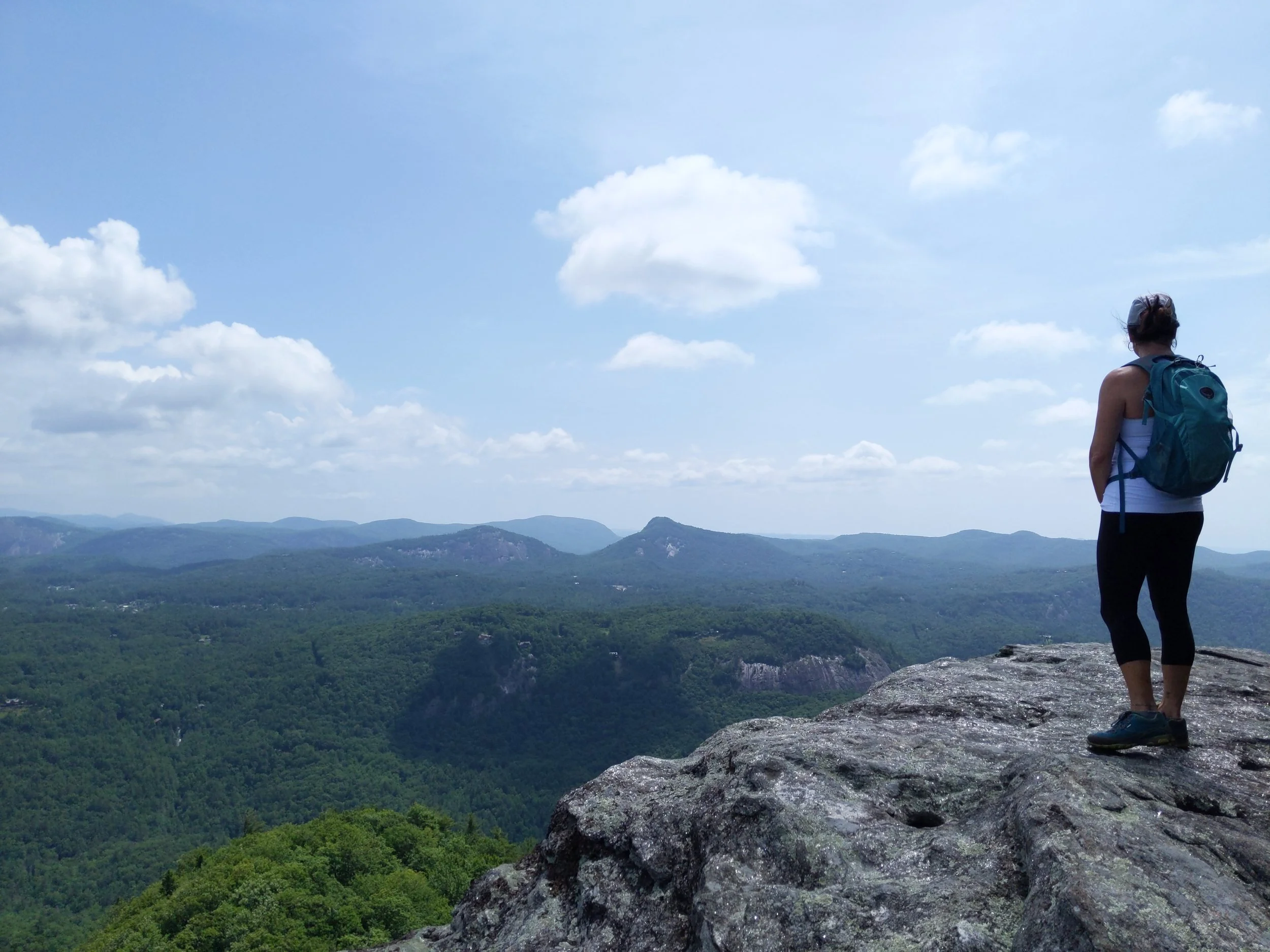
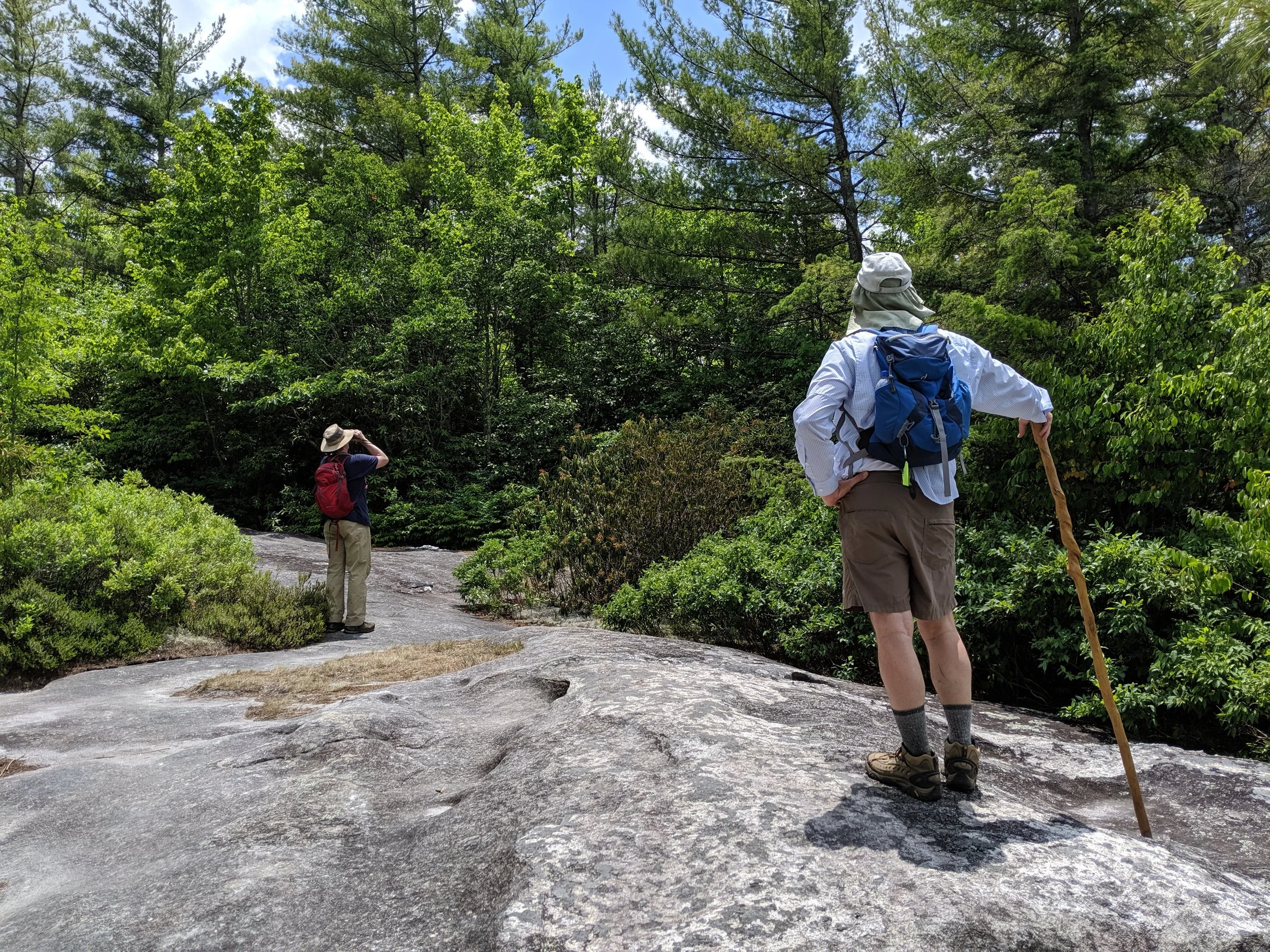
The Blue Ridge Connector (BRC) Regional Trail will link the mountain communities of Highlands and Cashiers, NC, to Clayton, GA, traversing extensive public lands managed by the US Forest Service. The approximately 45-mile route can be completed as a series of shorter hikes or as a full thru-hike over 5-7 days. Modeled on European trekking routes such as the Tour du Mont Blanc, the BRC would allow trekkers to carry a light daypack, staying at well spaced lodging locations along the way.
Because the distances between communities are too long for most people to hike comfortably in a single day, special “Hiker Inns” are proposed at Wilson Gap, the crossing of Hale Ridge Road, and in Whiteside Cove. It is proposed that these small inns will only be accessible by an ADA compliant footpath, not by private car. The inns will provide private rooms for up to 20 persons and a public space for family style communal supper and breakfasts.
To minimize traffic and parking issues it is proposed that a shuttle will travel the route each morning beginning in Clayton and stopping at each lodging spot along the route. The shuttle will transport luggage between the lodging spots as well as act as a “sag wagon” for those needing a break from hiking due to fatigue, injury, or inclement weather. Upon reaching Cashiers the shuttle will return to Clayton, bringing those finished with the trek back to their vehicles.
Completion of the Blue Ridge Connector depends upon approval by the USFS and generation of adequate funding. Both processes are expected to be lengthy and challenging. Current estimates for new trail and sidewalk as well as completing delayed maintenance on existing trails is $2.5 million. Estimates for the three Hiker Inns has not been developed at this time. It is likely that progress will occur in stages as funding and permits become available.
Proposed Route
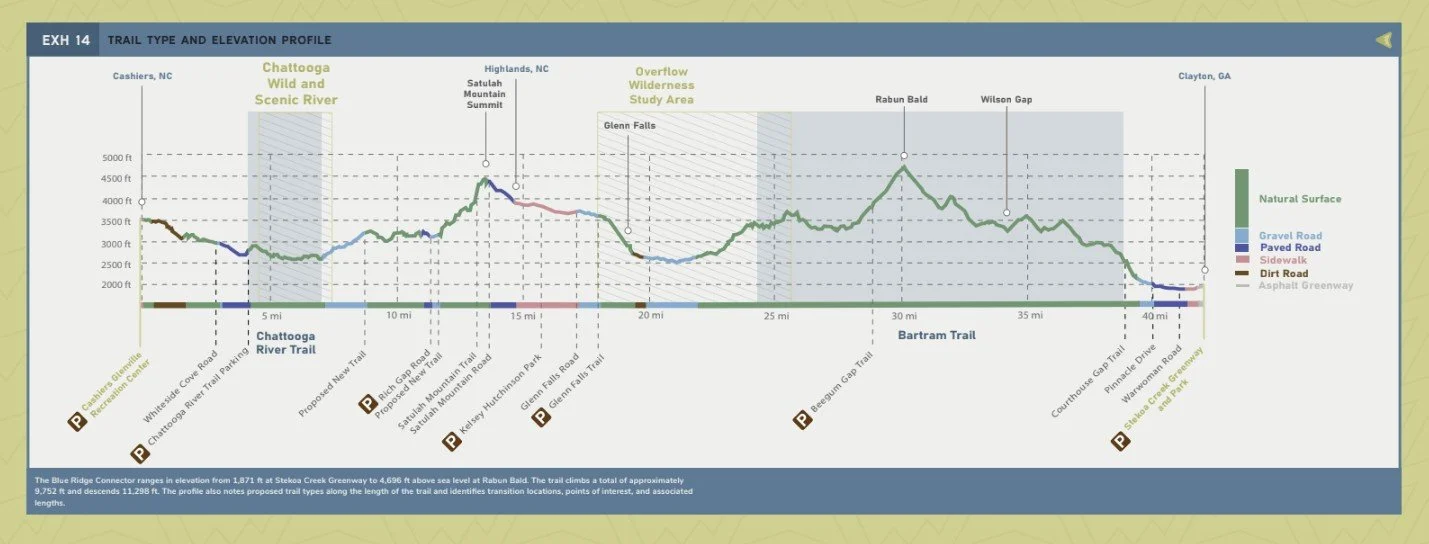
The proposed route initially includes about 7.5 miles of new trail and sidewalk as well as completion of delayed maintenance on about 20 miles of existing trail. Over time, funds generated by the trekking system will be used to maintain and improve the trail system as well as provide funding for greenways in the connected communities and protection and preservation of our local forests.